Building a Commercial Playground That Passes Inspection and Actually Lasts
A playground built for a school district or a homeowners association has to satisfy a different set of demands than a backyard play set.
September 1, 2026 · 3 min read
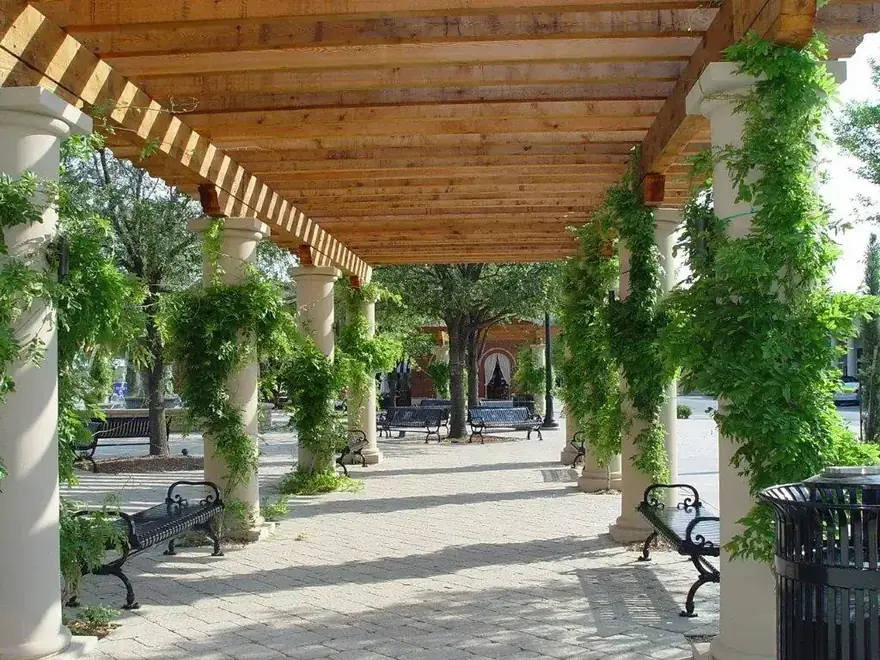
A playground built for a school, a municipal park, or a master-planned community is not a scaled-up version of a backyard play set. It gets used every day by dozens of children moving through it at once, it sits outside through every North Texas season, and somebody, a school district, a parks department, an HOA board, is responsible for it holding up to inspection and to liability standards long after the ribbon-cutting photo is taken.
The design process for a project like this usually starts with the same three questions regardless of who the client is: who is using this space and at what ages, what does the surrounding site allow for in terms of footprint and drainage, and what is the realistic maintenance budget once the ribbon comes down. Skipping any one of those three questions is how a playground ends up either underused because it does not fit its actual audience, or expensive to maintain because nobody planned for the upkeep a given surfacing choice requires.
Site preparation decides more than people expect
Before any equipment goes in, the site itself has to be graded, drained, and prepared to hold whatever surfacing is going over it. A playground built on poor drainage will pool water under the equipment, undermine the surfacing material over time, and create the exact standing-water conditions that shorten the life of both the structure and the safety surface around it. This is the stage where corners get cut most often because it is invisible once the project is finished, and it is also the stage that determines whether the playground still looks new in five years or is already showing failure points.
Choosing a safety surface is a real decision, not a formality
Safety surfacing is not one product with different colors. Rubber mulch, poured-in-place rubber, and synthetic turf each behave differently under weather, under heavy daily use, and under a maintenance budget. Rubber mulch is the lower upfront cost option but needs regular raking and topping off as it compacts and migrates toward the edges. Poured-in-place rubber holds its shape and its fall-height rating longer with less ongoing labor, at a higher installed cost. Synthetic turf surfacing reads well visually and drains fast, but needs the right infill and base preparation underneath it to keep its cushioning properties over years of use rather than just its first season.
- Rubber mulch: lower cost, higher ongoing maintenance to keep depth and coverage consistent
- Poured-in-place rubber: higher upfront cost, more consistent fall protection with less labor
- Synthetic turf: strong drainage and appearance, dependent on correct base and infill to hold cushioning
Equipment selection has to match who is actually using it
A playground serving a school with a defined age range needs different equipment than a community park serving toddlers through preteens on the same structure, and matching age-appropriate zones to actual use is a design decision as much as an equipment order. This is also where the site's specific constraints matter, available footprint, sightlines a school or an HOA wants preserved for supervision, and how the playground sits relative to parking and drop-off if it serves a school campus rather than a neighborhood park.
What passing inspection actually depends on
A commercial playground has to be built to hold up under formal inspection, both at installation and on an ongoing basis. That means fall-height ratings that match equipment height correctly, hardware and anchoring installed to the standard the equipment manufacturer specifies, and surfacing depth or thickness maintained at the level it was designed for, not the level it happens to be at after two years of foot traffic without topping off. None of that is guesswork. It comes down to installing to spec in the first place and then keeping a maintenance and inspection cadence that catches wear before it becomes a liability rather than after.
Maintenance is part of the build, not an afterthought
The projects that hold up longest are the ones where maintenance and inspection get planned in from day one rather than treated as a problem for whoever manages the property later. Every project also carries the required city permit, which we acquire on behalf of the school, park, or community we are building for, so that piece is off the client's plate from the start. A playground built well and then inspected and maintained on a real schedule is the version that is still safe and still looks right five years after it opens, not just on opening day.
American Landscape Systems — (469) 521-2200
Call (469) 521-2200More articles
What Actually Changes When a Commercial Property Moves to Central Control Irrigation
For a property manager running dozens of zones across a multi-acre site, the shift from standalone clocks to a networked system changes not simply the equipment.
Specifying Turf and Planting That Actually Survives a North Texas Summer
Site conditions in the Dallas-Fort Worth area do more damage to new landscaping than the heat ever gets credit for.